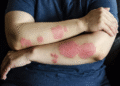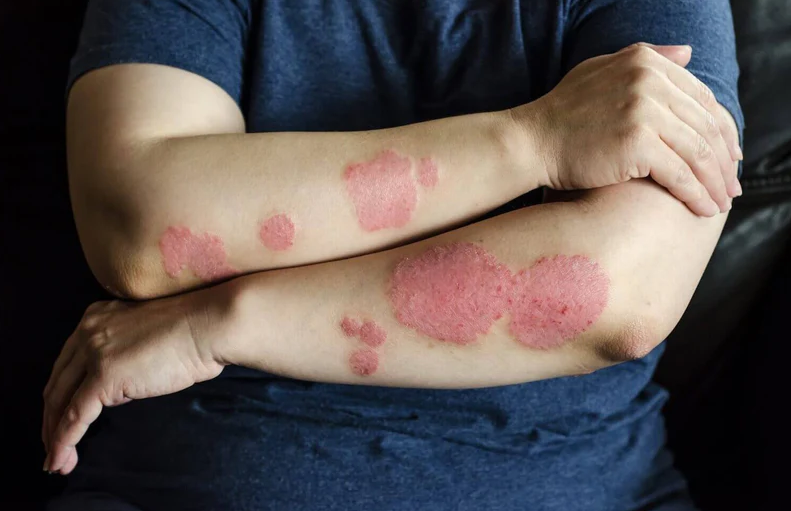
The autoimmune skin disorder psoriasis causes itching and pain. Plaque psoriasis is most common. It causes thick, scaly skin. Although there is no cure, psoriasis treatment can manage symptoms. Your doctor may prescribe psoriasis treatments or ointments.

Describe psoriasis.
Autoimmune psoriasis causes skin inflammation. Thicker, scaled skin is a sign of psoriasis. These thick, scaly regions are plaques.
Since psoriasis is persistent, it can flare up unexpectedly and has no treatment.
What are psoriasis types?
Different kinds of psoriasis exist:
- The most frequent kind of psoriasis is plaque. Between 80% and 90% of psoriasis patients have plaque.
- Skin folds show inverse psoriasis. Thin plaques without scales result.
- After a streptococcal sore throat, guttate psoriasis may occur. Children and young adults commonly get little, red, drop-shaped scaly patches.
- Small pus-filled lumps on plaques characterize pustular psoriasis.
- Erythrodermic psoriasis: This severe kind affects over 90% of your skin. This causes widespread skin discolouration and shedding.
- Sebopsoriasis: This variety causes oily, yellow pimples and plaques on the face and scalp. This combines psoriasis and seborrheic dermatitis.
- Psoriasis involves skin discolouration, pitting, and nail and toenail alterations.
Psoriasis affects which body part?
A psoriasis rash can appear anywhere. Your psoriasis is common:
- Elbows, knees.
- Inside your mouth and face.
- Scalp
- Nails and toes.
- Genitals.
- Lower back.
- Feet and palms.
Most people have tiny psoriasis patches. Plaques connect and cover huge areas of the body in extreme situations.
Psoriatic arthritis?
Symptoms of psoriatic arthritis include joint discomfort and swelling. Like psoriasis, psoriatic arthritis is an autoimmune disease that disrupts the immune system. Due to inflammation, 1 in 3 psoriasis patients develop arthritis. Early psoriatic arthritis treatment reduces joint deterioration.
Who gets psoriasis and how common?
Any age, gender, or race can get psoriasis. Millions suffer with psoriasis. More than 3% of Americans have psoriasis.
Is psoriasis eczema?
Eczema and psoriasis are skin conditions. Discolored skin, redness, and itching are signs of both illnesses. Psoriasis plaques cause scaled, thick skin. Eczema creates dry, rough skin. Eczema tends to itch more than psoriasis.
What causes psoriasis?
A skin-inflaming immune system produces psoriasis.
Your immune system should kill bacteria to keep you healthy if you have psoriasis. Instead, your immune system may mistake healthy cells for invaders. Skin plaques result from your immune system's inflammation or swelling.
New skin cells replace old ones in 30 days. Your overactive immune system delays skin cell growth by three to four days. Scales, skin plaques, and frequent skin shedding result from rapid cell replacement.
Psoriasis is inherited. Because biological parents may pass on psoriasis, it may be genetic.
What if standard psoriasis treatments fail?
If your psoriasis symptoms don't improve after treatment or if you have 10% or more skin involvement, your doctor may recommend these treatments:
- Light therapy: Specific wavelength LED lights reduce skin inflammation and slow cell production.
- PUVA: Psoralen and ultraviolet light are used in this treatment.
- Retinoids: Vitamin A-related drugs can treat psoriasis but can cause birth defects.
- Immune therapies: Newer biologics and small molecule inhibitors block your immune system to prevent autoimmune reactions.
- Methotrexate: For severe psoriasis, doctors recommend it. It may damage the liver. Your doctor will test your blood if you take it. Regular liver biopsies may be needed to monitor liver health.
- Cyclosporine: It treats severe psoriasis but can damage the kidneys and raise blood pressure.
How soon will I feel better after treatment?
A psoriasis flare-up can last weeks to months. Your doctor may prescribe medications to speed skin recovery. After symptoms disappear, psoriasis is in remission. You may experience another symptom outbreak. Remission can last months or years. If certain triggers trigger your symptoms, avoiding them prolongs remission.